Canada’s Beauty Market Grows 6
Canada’s beauty industry is showing stronger resilience than many discretionary categories in 2026. New data released by…

Latest Updates

Interesting Article

Canada’s beauty industry is showing stronger resilience than many discretionary categories in 2026. New data released by…

This guide reflects Beauty Bloom’s 2025 Toronto nail salon selection. For current options, browse beauty businesses in…

Improve Efficiency and Customer Experience In the world of beauty salons, managing appointments and bookings is essential…

Finding the best hair salon in Ottawa can feel overwhelming, especially with so many options offering cuts,…
Nails Salons
Hair Salons
SPA
Skincare Clinic
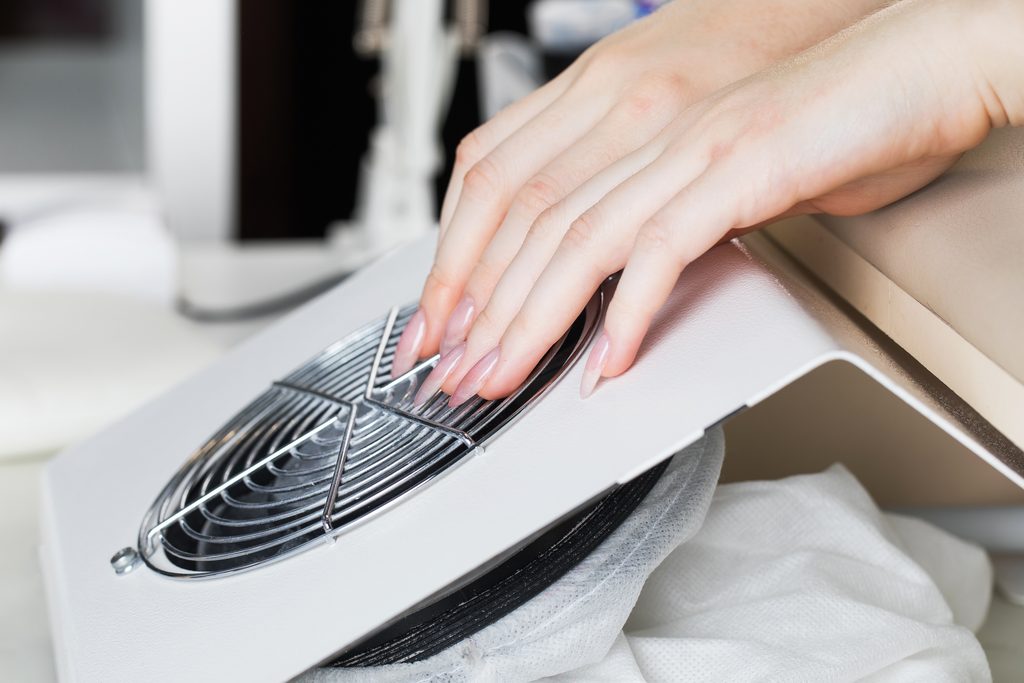
A nail dust collector helps capture the fine particles produced when filing, buffing, drilling, and removing nail enhancements. For nail technicians, it can help keep the workstation cleaner, reduce airborne dust around the service area, and make routine salon cleanup more manageable.
The right system depends on how and where you work. Portable rechargeable models are useful when technicians move between stations, while larger or source-capture systems may be better suited to busy professional workspaces. It is also important to understand that a nail dust collector is primarily designed for particulate dust; it should not automatically be treated as a substitute for salon ventilation or a system specifically designed to capture chemical vapors.
A nail dust collector is a local extraction device designed to collect fine dust created during nail services.
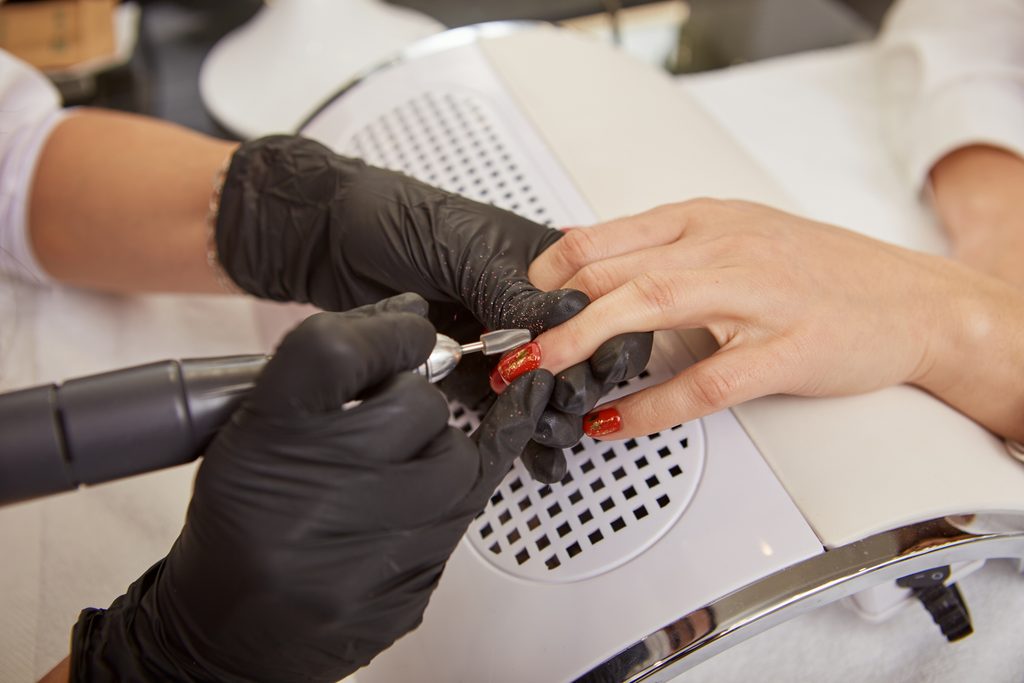
Dust is commonly generated when technicians:
Instead of allowing as much of this material to settle across the workstation and surrounding area, the collector uses suction to draw particles toward a filter or collection system.
OSHA defines a dust collector as equipment used to separate dust from air handled by an exhaust ventilation system. Its nail-salon guidance also recommends considering portable ventilation machines to remove dust and chemicals directly from the work area.
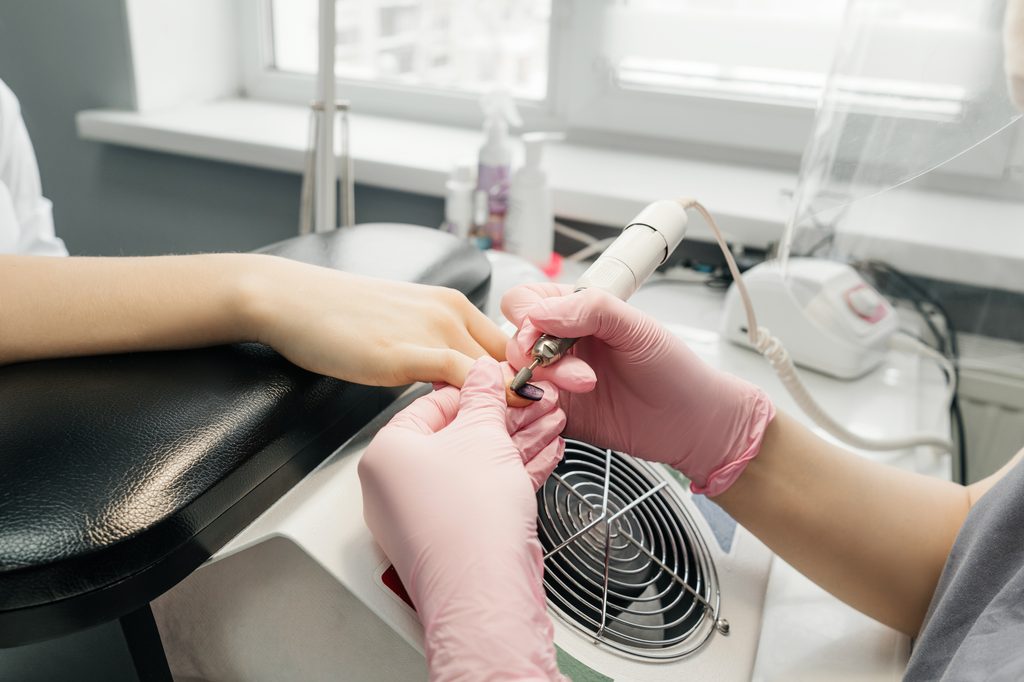
The best choice depends on the technician's services, workstation, and daily workload rather than one specification alone.
Consider these features before choosing a model:
Different professional models approach portability, power, filtration, and workstation design in different ways.
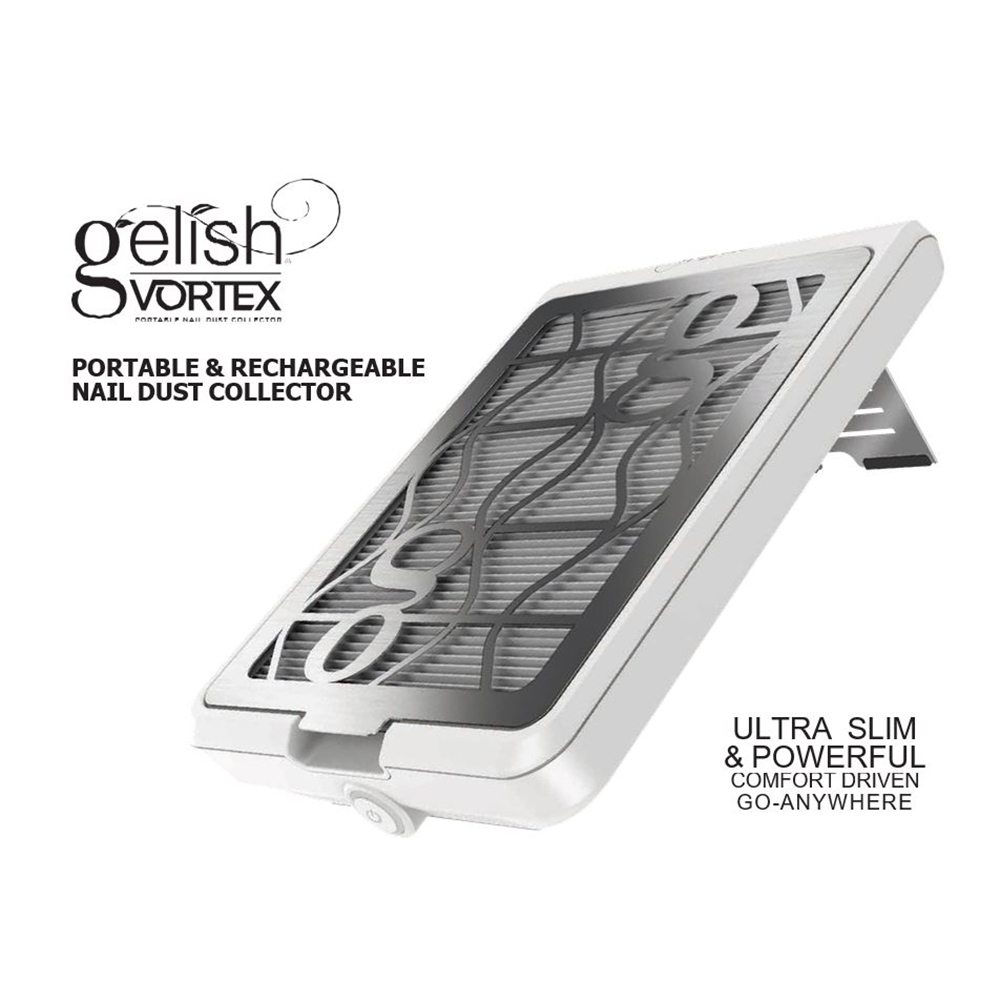
The Gelish VORTEX™ Portable Nail Dust Collector is designed for professional nail technicians who want effective dust collection without taking up significant workstation space. Its ultra-slim design is only 2.16 inches high and is roughly the size of a standard magazine, making it a practical option for compact nail stations.
The VORTEX™ features a 4,300 RPM motor and is designed to provide strong airborne dust collection while maintaining a quieter working environment. Its rechargeable battery allows technicians to use the collector without being continuously connected to an outlet, while plug-in operation provides an additional power option. The unit can also be used while charging, adding flexibility during busy salon days.
Its compact footprint and portable design make the VORTEX™ particularly suitable for technicians who need to move between workstations or want to keep their nail table as uncluttered as possible. Gelish also designed the unit with circuitry intended to maintain consistent power leve
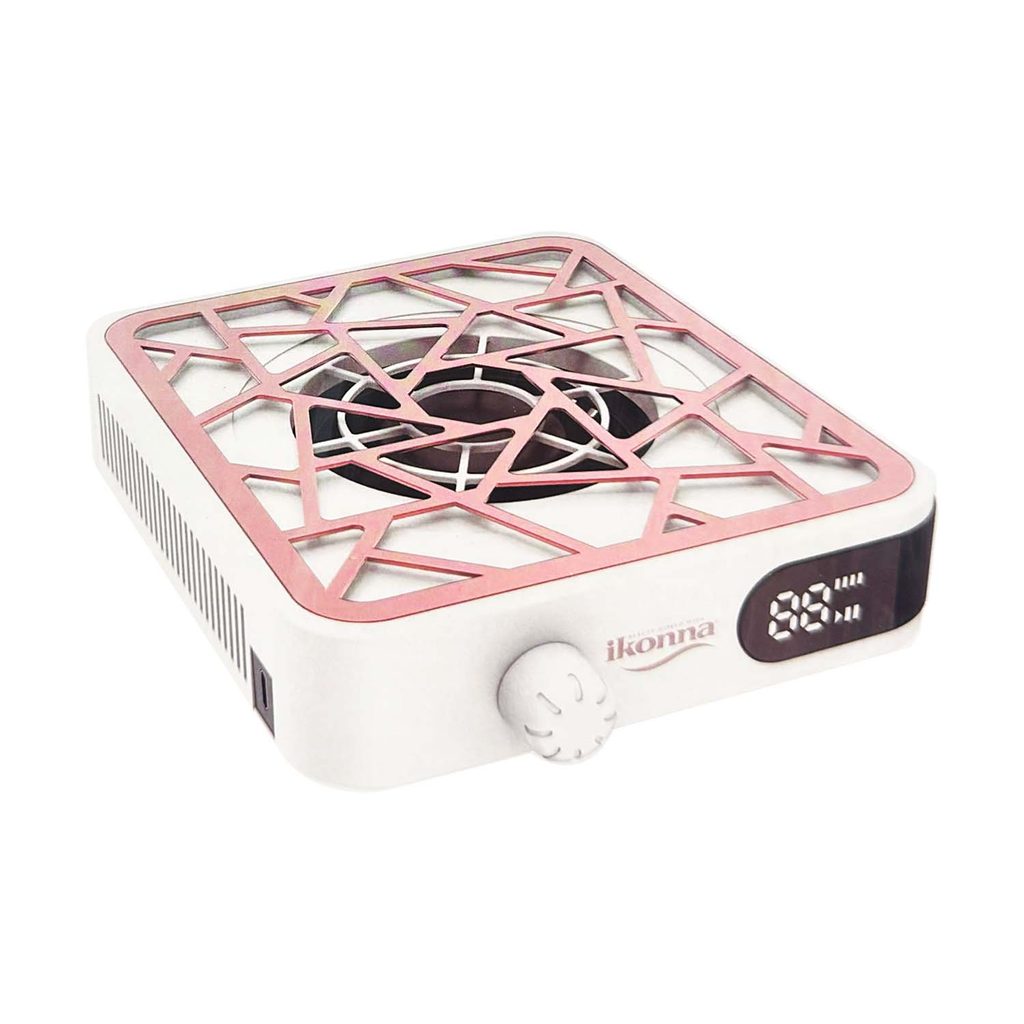
The Ikonna Portable & Rechargeable Nail Dust Collector is a compact option with variable speed control and rechargeable operation.
According to the supplied product specifications, it features:
These specifications make it a portable option for technicians who want adjustable operation and cordless flexibility.

The Aprés Dust Collector combines a compact workstation design with rechargeable, cordless operation. Aprés lists adjustable suction, an acetone-resistant coating, a replaceable filter, USB output, a magnetic frame, and a built-in battery.
Listed specifications include:
Its cordless design can be useful when technicians need to move between manicure and pedicure stations.
Not necessarily.
This is one of the most important distinctions when choosing salon air equipment.
Nail dust collectors are primarily intended to capture particulate dust. Chemical vapors and fumes from nail products require appropriate ventilation and, where applicable, equipment specifically designed for chemical or fume extraction.
OSHA notes that nail salon products can expose workers to chemical vapors, dusts, or mists and recommends ventilation to reduce chemical exposure.
If your main concern is acetone odor, solvent vapors, or VOCs, check the filtration technology and manufacturer's intended use of the specific air-cleaning or extraction system rather than assuming that a dust collector provides the same function.
A simple way to narrow your options is to start with your working environment.
| Your priority | Features to consider |
|---|---|
| Small nail table | Slim, compact footprint |
| Flexible or mobile work | Rechargeable, cordless design |
| Multiple stations | Portable construction and easy handling |
| Frequent e-file services | Strong local dust collection |
| Long working days | Battery capacity or continuous plug-in operation |
| Easy maintenance | Accessible, replaceable or washable filter |
| Client comfort | Noise level and smooth operation |
| Permanent workstation | Built-in or source-capture extraction |
For salon owners, it can also be useful to consider replacement filter availability and operating costs before purchasing. A collector is only useful as a long-term workstation solution if its filters and other maintenance requirements fit the salon's routine.
A nail dust collector uses suction and filtration to capture fine particles produced during services such as filing, e-filing, buffing, and nail enhancement removal.
No. A nail dust collector is generally designed to capture nail dust close to the workstation. An air purifier may use different filtration technologies and can have a broader purpose. Neither should automatically be assumed to replace appropriate salon ventilation.
A standard nail dust collector should not automatically be considered a fume extractor. Chemical vapors require appropriate ventilation or equipment specifically designed and rated for that purpose.
They can be particularly useful when technicians move between stations. Battery runtime, charging time, and whether the unit can operate while charging are important factors to check.
There is no universal replacement schedule. Follow the manufacturer's maintenance instructions and replace or clean the filter according to its design and condition.
Yes. E-file and other filing services generate fine nail particles, making local dust collection particularly relevant to these services.
Consider suction performance, filter type, maintenance, noise, size, portability, power options, battery life, and whether the unit is appropriate for the services and workstation where it will be used.


Compare Canadian wholesale nail supply distributors, professional account requirements, brands, equipment and hidden costs before stocking a salon.